You already use ChatGPT or Claude most weeks. But you brief it from scratch every time: the same context pasted in, the same kind of prompt, and the value gone the moment you close the tab. A personal AI operating system is what stops that. It is the setup around your AI use that already knows your work, so each use builds on the last instead of starting over.
Built by Matt Wills and Alvin Foo, who run these systems every day and teach them to Alvin's 490,000-strong LinkedIn community of senior professionals.
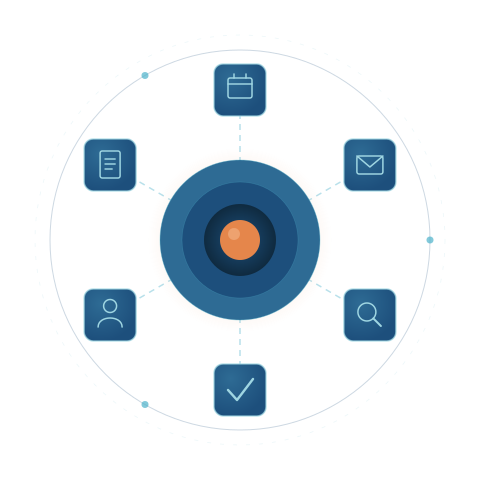
A personal AI operating system is the setup around your AI use that makes it repeatable: a place the AI already knows your role, projects and voice; a small set of saved instructions and workflows for the jobs you do often; and a habit of checking its work before it counts. Instead of re-explaining yourself every time, you brief it once and reuse it.
This isn't a certificate course in AI theory. It's the working setup most courses skip.
The difference is whether your AI use compounds. As a chatbot, every conversation starts cold and the value disappears when you close the tab. As a system, your context and your best prompts are saved, so each use builds on the last. 10XMe describes three levels.
One-off prompts, generic answers, starts from scratch every time. Where most professionals are.
Reuses prompts and pastes in context, but is still connecting the AI to each task by hand.
Runs a personal AI operating system, so the AI works with their context and handles the jobs they repeat.
Picture a director preparing her monthly board summary. She spends the best part of an hour re-pasting last quarter's figures, re-explaining the format she wants, and re-editing the tone until it sounds like her.
Her system already holds the board's format, the recurring metrics and her voice. She asks for the summary in a sentence and edits a near-final draft in minutes. Same judgement, a fraction of the work.
You build it in three layers, in plain English. No coding required.
Give the AI standing information about your role, your projects and how you write, so it stops asking and starts knowing.
Save the handful of prompts and steps you repeat into reusable instructions for each recurring job.
Add a quick checking step so you trust the output before it leaves your desk, and stay accountable for what goes out.
You can start in ChatGPT or Claude today. The first version takes an afternoon, and it improves as you refine it.
Watch for the jobs you do more than once: the weekly report, the follow-up email, the meeting prep, the first read of a long document. For each one, write down the steps and the context the AI needs once, save it, and run it the same way next time. That single shift, from retyping to reusing, is what turns scattered AI use into a system.
Done well, it behaves like a chief of staff who knows your work. It prepares your meetings, drafts your follow-ups, pulls your research together and gives you a solid first read on decisions. You keep the judgement. It does the first draft. That is what 10XMe teaches senior, non-technical professionals to build, step by step.
You already use AI every day. The free 3-Levels Diagnostic shows which level that actually puts you on, and the one move to the next. No email needed to see your result.
Take the free diagnostic →